
Annual report 2025: Operating environment

The operating environment was still characterised by economic uncertainty and challenges related to cost level and the predictability of financing. The sustainability of public finances and adaptation measures were key topics of discussion, and they had an extensive impact on the operating conditions of the public sector.
Finland’s security policy environment remained tense as Russia’s war of aggression continued in Ukraine. The importance of preparedness, resilience and international cooperation was emphasised, and NATO membership formed a key framework for developing security and defence solutions.
The labour market was characterised by uncertainty, change negotiations and increasing unemployment, which affected consumer confidence and the overall development of the economy. Digitalisation, artificial intelligence and technological innovations emerged as important means of improving productivity and service efficiency.
From the perspective of Erillisverkot, the significance of critical communications infrastructure was emphasised. The continued change in the security environment and the growing importance of critical infrastructure emphasised the need for further service development and more agile operations in cooperation with customers and stakeholders.
Megatrends affecting the operations of Erillisverkot
| Megatrend | Effect on operations |
| Geopolitical tensions and societal instability | Interest in and demand for Erillisverkot’s services remain high. Through user organisations, Erillisverkot’s critical communications services contribute to safety and stability in society. |
| Digitalisation and AI | The operations by the authorities depend on, among other things, reliable data, secure information systems and connections. For Erillisverkot, these create business opportunities in wireless data transfer and mobile communication service solutions for the authorities. Shared network and ICT solutions promote the national economy and security compared to a situation where each security operator or authority would have its own locally optimised solutions. The dependence of digitalisation on energy supply must also be taken into account: ICT solutions cannot function without electricity. Erillisverkot’s AI strategy emphasises two main themes: delivering value to the customer and improving internal efficiency through the use of AI solutions. |
| Economic transformation | The difficult economic times in Finland also have a negative impact on Erillisverkot’s profitability, resource availability, price stability and the customers’ purchasing power. Public finance adjustment measures have an impact on Erillisverkot, both directly and indirectly through our customers. In autumn 2025, change negotiations were conducted for production-related and financial reasons, resulting in the termination of 69 positions. |
| Security cooperation between the EU and the Nordic countries and NATO | Erillisverkot has a special-purpose role in providing critical security communications services across national borders, for example, the EUCCS project, the pan-Nordic public safety network service and the Galileo PRS service. Finland’s NATO membership brings additional requirements for Erillisverkot’s operations and services as well as new business opportunities. |
| Climate change and loss of biodiversity | The key to combating climate change is to reduce emissions and phase out the use of fossil energy sources. This guides our energy efficiency efforts. Adaptation to climate change and increasing extreme weather phenomena increase contingency requirements. The importance of precise, shared situational awareness and management as well as backup power and personnel arrangements is emphasised. These affect the continuity and contingency planning related to our services. All activities have an impact on the surrounding nature, and this is also true for Erillisverkot. We take into account, for example, nesting times and the restoration of our footprint in our operations. |
| Population ageing and sufficiency of workforce | The number of jobseekers has increased in many sectors, but there may still be a shortage of skilled and experienced professionals in the ICT sector, in particular. |
| Increasing responsibility and sustainable development requirements | The transparent implementation and integration of sustainability into operations continues. Global challenges and societal needs have not disappeared, and the state owner’s expectations for the sustaiof its companies remain. |
Read more about our year 2025
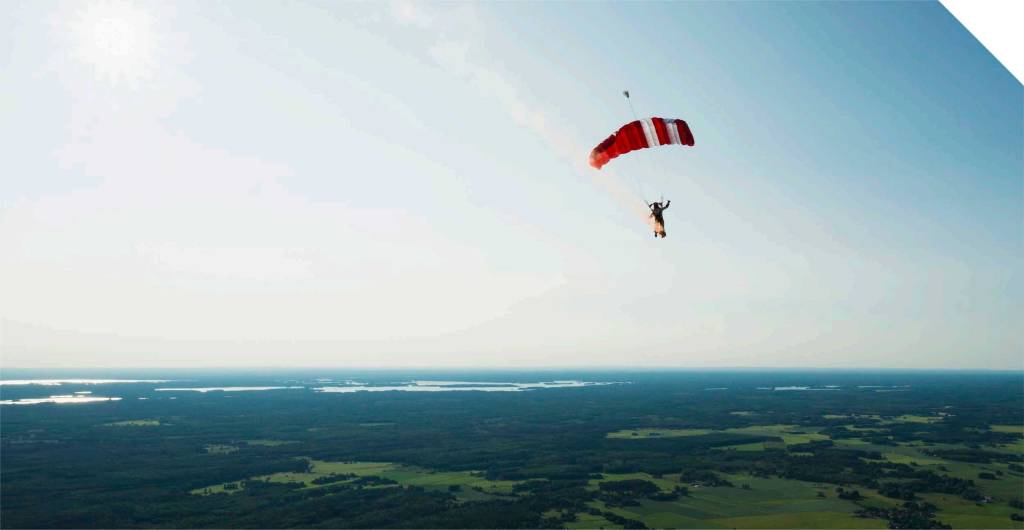
The constant change in the international and national security environment, the acceleration of digitalisation and the economic uncertainty affecting the society as a whole challenged us even more than before.
READ MORE ABOUT OUR KEY EVENTS AND FIGURES IN 2025 AND OUR CEO’S REVIEW
We want to ensure the resilience of our services and strive for an even more impactful role as an ICT operator for the state
READ MORE ABOUT OUR STRATEGY AND BUSINESS REVIEW
Our sustainability themes were environment and climate, functioning of services and society, renewing workplace community and its wellbeing and good governance, finances and procurement practices.
READ MORE ABOUT OUR SUSTAINABILITY REPORT
Our long-term sustainability targets aim to strike a balance between ambition and realism and to be sufficiently concrete.
READ MORE ABOUT OUR SUSTAINABILITY STRATEGY UNTIL 2030